For decades, organizations have invested heavily in analytics to understand what happened in the past. Dashboards summarize performance, reports explain trends, and analysts investigate patterns in historical data.
Yet the ultimate value of analytics has never been retrospective insight. Its true purpose is helping organizations make better decisions about the future.
As artificial intelligence and advanced analytics mature, a new discipline is beginning to emerge: decision intelligence. This field integrates analytics, machine learning, experimentation, and decision science to improve how organizations make strategic choices.
Rather than stopping at insight generation, decision intelligence focuses on something more powerful — engineering better decisions.
Moving Beyond Traditional Analytics
Traditional analytics workflows are now common across most organizations. Data is collected from operational systems, stored in data warehouses or analytical platforms, analyzed for patterns, and presented through dashboards or reports.
This process provides valuable visibility. Leaders can observe how revenue is trending, which products are growing, how marketing campaigns are performing, and where operational inefficiencies exist.
However, a persistent gap often emerges between insight and action.
Even organizations with sophisticated analytics capabilities frequently struggle to translate reports into consistent decision-making. Two managers reviewing the same dashboard may reach entirely different conclusions. Budget allocations may still rely on intuition, internal politics, or incomplete interpretations of the data.
Decision intelligence addresses this gap by embedding analytics directly within the decision process itself.
Instead of treating analytics as the final output, decision intelligence integrates several capabilities into a structured decision architecture:
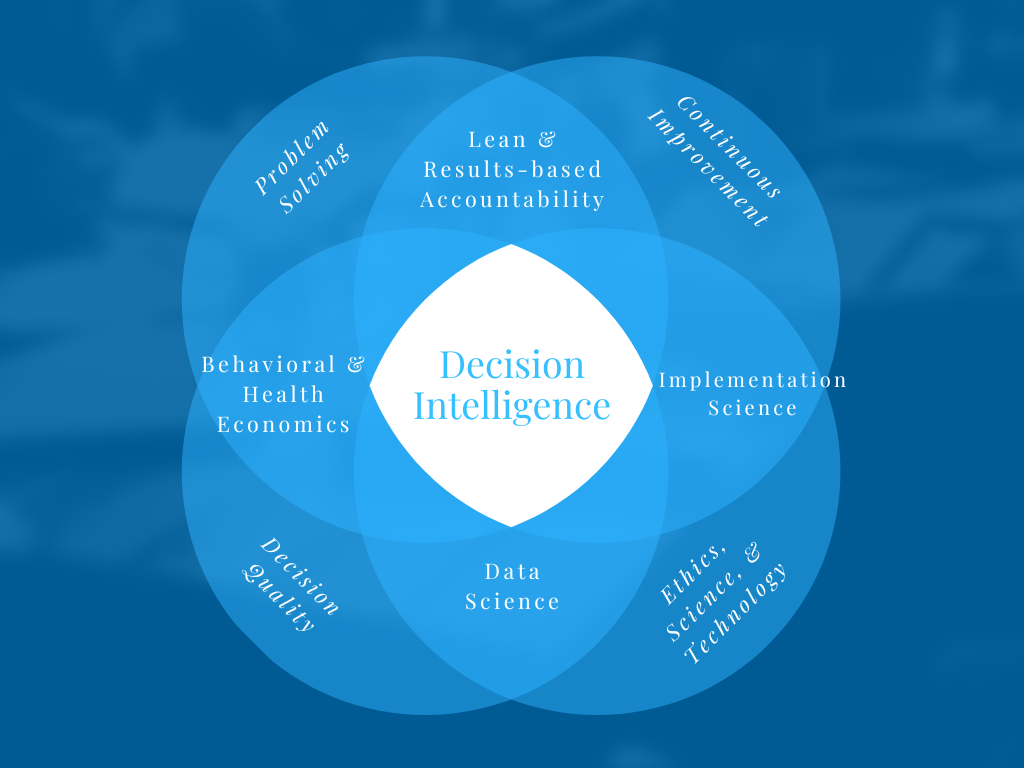
- analytics explains past performance
- predictive models estimate future outcomes
- experiments establish causal impact
- decision frameworks guide how alternatives are evaluated
When these elements are integrated, analytics becomes more than a reporting tool. It becomes part of an operational system designed to support disciplined decision-making.
Combining Analytics, Machine Learning, and Decision Science
Decision intelligence emerges from the convergence of several disciplines that historically operated independently.
Analytics provides descriptive and diagnostic insight. Organizations use it to understand historical performance, identify trends, and detect anomalies across areas such as revenue, customer behavior, marketing performance, and operational efficiency.
Machine learning introduces predictive capabilities. Models trained on historical data can estimate outcomes such as demand forecasts, churn probabilities, conversion likelihood, or pricing sensitivity.
Experimentation adds causal understanding. Controlled tests—such as A/B experiments or geo-based trials—allow organizations to determine whether a particular action actually produces measurable improvement.
Decision science provides structured frameworks for evaluating alternatives, weighing trade-offs, and managing uncertainty.
When these capabilities operate together, organizations gain a much stronger decision infrastructure.
Consider how an e-commerce retailer might evaluate marketing investments. Historical analytics may reveal which acquisition channels produced the highest customer lifetime value in the past. Predictive models can estimate how additional spending might influence future customer acquisition. Experiments test new messaging or targeting strategies to determine which campaigns drive the strongest conversion rates.
Finally, decision frameworks allow executives to compare scenarios by evaluating expected return, marketing costs, and operational constraints.
The result is not a collection of disconnected analyses, but a structured decision process grounded in evidence.
Decision Frameworks That Guide Strategy
One of the most important components of decision intelligence is the creation of structured decision frameworks.
Many organizations possess extensive data and sophisticated analytical tools, yet the process through which decisions are made often remains informal. Strategic choices frequently emerge from meetings or presentations where stakeholders interpret the same information differently.
Decision frameworks introduce structure and consistency.
A framework defines the variables, constraints, and evaluation criteria that guide a particular decision. Instead of relying on loosely interpreted metrics or intuition, decision-makers evaluate alternatives within a clearly defined analytical structure.
At its core, a decision framework converts a complex business question into a more formal analytical problem.
For example, consider a marketing team allocating advertising budget across several channels. Without a framework, discussions may revolve around anecdotal experience or individual preference. One stakeholder may prioritize channels with high conversion rates, while another emphasizes brand visibility or market expansion.
A structured framework changes the discussion.
The team first defines the key variables influencing the decision:
- customer acquisition cost
- predicted customer lifetime value
- historical channel performance
- sales pipeline capacity
Analytics and predictive models estimate these variables quantitatively. Attribution analysis reveals how channels contribute to conversions, while operational data highlights constraints within the sales pipeline.
With these inputs in place, decision-makers can compare alternative budget allocations using a consistent set of metrics. Scenario modeling also allows teams to evaluate uncertainty by examining best-case, worst-case, and expected outcomes.
Over time, these frameworks become repeatable decision systems. Each new decision improves the framework as additional data and outcomes are incorporated.
Predictive Models Informing Business Choices
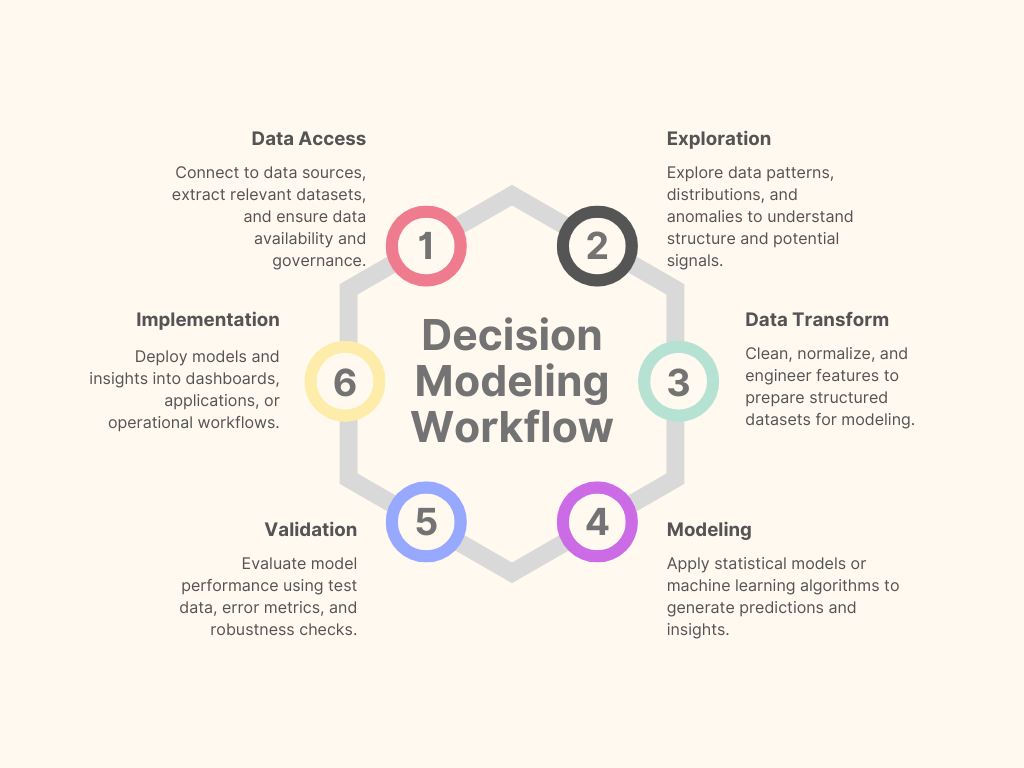
Predictive analytics plays a central role in decision intelligence because it allows organizations to evaluate potential future outcomes rather than simply analyzing past performance.
Machine learning models can estimate a wide range of business outcomes:
- customer churn probabilities
- product demand forecasts
- campaign response rates
- sales lead conversion likelihood
- pricing elasticity
These predictions become powerful when they are integrated directly into decision processes.
For example, a retailer evaluating a price change may use pricing models to estimate demand elasticity based on historical sales patterns. Analysts can simulate several pricing scenarios and project their potential impact on revenue, margins, and inventory turnover.
Marketing teams apply similar models when allocating advertising budgets. Response models estimate how increased spending in a particular channel may influence customer acquisition, allowing marketers to prioritize investments with the highest expected return.
Predictive models do not eliminate uncertainty, but they allow organizations to evaluate decisions using structured estimates of future outcomes rather than relying solely on historical observation.
AI-Supported Strategic Planning
Artificial intelligence is increasingly transforming how organizations approach strategic planning.
Traditional planning often relies on historical reports and trend extrapolation. While useful, these methods can struggle to capture the complexity and uncertainty of modern markets.
AI expands the analytical toolkit by enabling organizations to simulate and evaluate multiple potential futures.
For example, forecasting models can analyze historical sales alongside external signals such as macroeconomic indicators, seasonal demand patterns, and regional economic trends. These models can generate projections under different economic conditions, helping leaders prepare for a range of possible scenarios.
AI models can also evaluate resource allocation decisions. Marketing budgets distributed across search advertising, social media, affiliate channels, and other platforms can be optimized by modeling how spending changes influence lead generation and revenue outcomes.
Another important application involves customer segmentation. Machine learning models can analyze behavioral patterns and identify which customer groups are most likely to grow in the future. These insights inform decisions about product development, marketing focus, and long-term engagement strategies.
By enabling scenario simulation and deeper pattern detection, AI allows organizations to explore strategic options more systematically.
Feedback Loops for Continuous Improvement
A defining characteristic of decision intelligence is the presence of feedback loops connecting decisions, outcomes, and learning.
In traditional analytical environments, analysis is often periodic. Reports summarize past performance, decisions are made, and the organization moves on without systematically learning from the results.
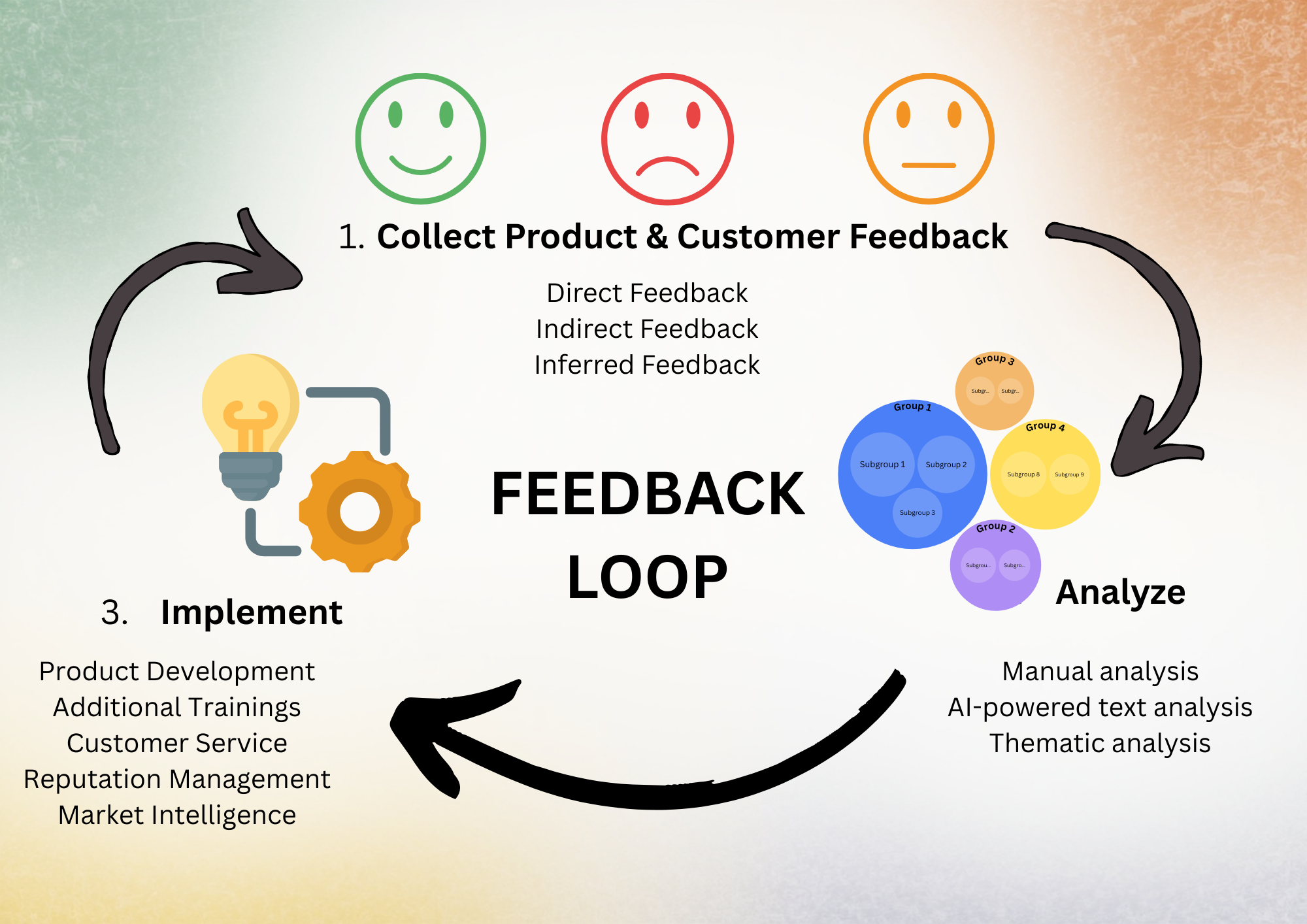
Decision intelligence treats each decision as part of a continuous learning cycle.
Every decision produces measurable outcomes—changes in revenue, customer behavior, operational performance, or other metrics. These outcomes generate new data that can be analyzed and incorporated into future decisions.
Marketing experimentation provides a clear example. Controlled tests comparing different campaign strategies generate measurable results such as conversion rates or customer acquisition costs. These insights accumulate over time, gradually improving the organization’s understanding of what drives performance.
Predictive models also benefit from feedback loops. As new data becomes available, models can be retrained to reflect evolving customer behavior or market conditions. Each iteration improves model accuracy and strengthens the organization’s ability to forecast future outcomes.
Through repeated cycles of decision, measurement, and refinement, analytics becomes a continuous learning system embedded within the organization’s operations.
The Role of Analysts in a Decision Intelligence Era
As decision intelligence becomes more widespread, the role of analysts is evolving.
Traditionally, analysts were primarily responsible for producing reports, dashboards, and ad-hoc analyses. These tasks remain important, but analysts are increasingly involved earlier in the strategic process.
In a decision intelligence environment, analysts help design the systems through which decisions are evaluated.
They collaborate with business leaders to define decision frameworks, identify relevant variables, and ensure that predictive models and experimentation results are incorporated effectively into strategic planning.
Analysts also play a critical role in interpreting model outputs and communicating their implications. Predictive systems produce complex results that must be evaluated carefully and explained within a broader business context.
In this sense, analysts are becoming architects of decision systems rather than simply providers of information.
The Future of Decision Engineering
Decision intelligence represents an important stage in the evolution of analytics.
For many years organizations focused on collecting data and building dashboards. The next stage is learning how to translate that information into consistent, high-quality decisions.
As artificial intelligence and advanced analytics continue to evolve, organizations will increasingly build systems that connect insight generation directly to strategic action.
Analytics will no longer function primarily as a reporting tool. Instead, it will become a discipline dedicated to improving how decisions are made across an organization.
The future of analytics may therefore not be defined by better dashboards or more sophisticated models. It may be defined by something more fundamental:
the ability to engineer better decisions.